Jamal Daniel is an entrepreneur, investor, and media founder whose work reflects a sustained engagement with the history, culture, and contemporary realities of the eastern Mediterranean. As founder and chairman of Crest Investment Company, he has overseen a diverse portfolio spanning energy, technology, media, hospitality, manufacturing, and real estate. Beyond business, Jamal Daniel established the New Levant Initiative to encourage economic cooperation and cultural dialogue among societies historically connected through the Levant. His founding of Al-Monitor further demonstrates a commitment to informed, independent analysis of Middle Eastern affairs, earning recognition from major international media organizations. Through Levantine Films and the Levant Foundation, his efforts extend into storytelling, education, humanitarian support, and academic research related to the region. Having been born in Syria, raised in Lebanon, and educated in Europe and the United States, his personal and professional background provides a grounded perspective for introducing the Levant as a shared historical and cultural space.
An Introduction to the Levant
The Levant is a historically important region located along the eastern coast of the Mediterranean Sea. Positioned at the junction of Asia, Africa, and Europe, it has long served as a natural bridge between continents. Due to this strategic placement, the area became a major route for population movement, commercial exchange, and the dissemination of religious traditions. Over thousands of years, these interactions produced deeply interconnected cultural and political histories.
The name “Levant” originates from the French word “levant,” meaning “rising,” a reference to the sunrise in the east. This term reflects how early European travelers viewed the eastern Mediterranean from a western standpoint. In the 16th century, the name gained wider use through organizations such as the English Levant Company, which coordinated trade with territories under the Ottoman Empire’s control. Scholars later adopted the term to describe both the geography and shared cultural patterns of the Near East.
Notably, the Levant’s boundaries have never been entirely fixed. In a broad historical sense, the region stretches from the Taurus Mountains in southern Turkey to the Sinai Peninsula in Egypt. It is bordered by the Mediterranean Sea to the west and gradually blends into the Arabian Desert to the east. In modern discussions, the Levant is often defined more narrowly, typically referring to Israel, Jordan, Lebanon, Palestine, and Syria.
Archaeologists tend to use more specific definitions. Some identify the Plain of ’Amuq as the northern boundary and the Wadi al-Arish river as the southern limit. There is disagreement over whether places such as Iraq or Cyprus should be included, with decisions often based on cultural connections rather than political borders. Consequently, the Levant is better understood as a flexible historical zone rather than a clearly outlined region on a map.
Importantly, the region played a central role in early human development. Around 10,000 BCE, communities in the southern Levant began practicing agriculture and constructing permanent settlements. Sites like Jericho and Ain Ghazal illustrate the early transition toward complex societies. The area also formed part of the “Levantine corridor,” the main route used by early humans migrating out of Africa into other parts of the world.
During the Bronze Age, the Levant was dominated by powerful city-states protected by fortified walls. Coastal centers such as Ugarit became major hubs of international trade, linking distant cultures through commerce and diplomacy. Megiddo gained strategic importance because it controlled a critical land route between Egypt and Asia. Later, Phoenician innovations in shipbuilding, navigation, and communication reshaped Mediterranean trade.
For centuries, the Levant was a focal point of imperial competition. Egyptian, Hittite, and Assyrian powers fought to control its key corridors. After the Bronze Age system’s collapse, smaller kingdoms such as Israel, Judah, and Phoenicia emerged and left lasting legacies. The conquests of Alexander the Great and the Roman rule further integrated the region into a wider Mediterranean world.
A major transformation occurred in the 7th century CE with the arrival of Islamic armies. Damascus became the capital of the Umayyad Caliphate, placing the city at the center of a vast empire. In later centuries, the Crusades turned the region into a contested frontier between Christian and Islamic forces. Ottoman rule eventually brought relative stability and reinforced the Levant’s role in global trade until the early 20th century.
Under Ottoman rule, cities such as Beirut and Smyrna became cosmopolitan ports where diverse ethnic and religious groups coexisted. Markets blended Ottoman and European styles, while traders used Lingua Franca. Jewish, Christian, and Muslim communities shared urban spaces, creating a vibrant environment of cultural interaction and exchange.
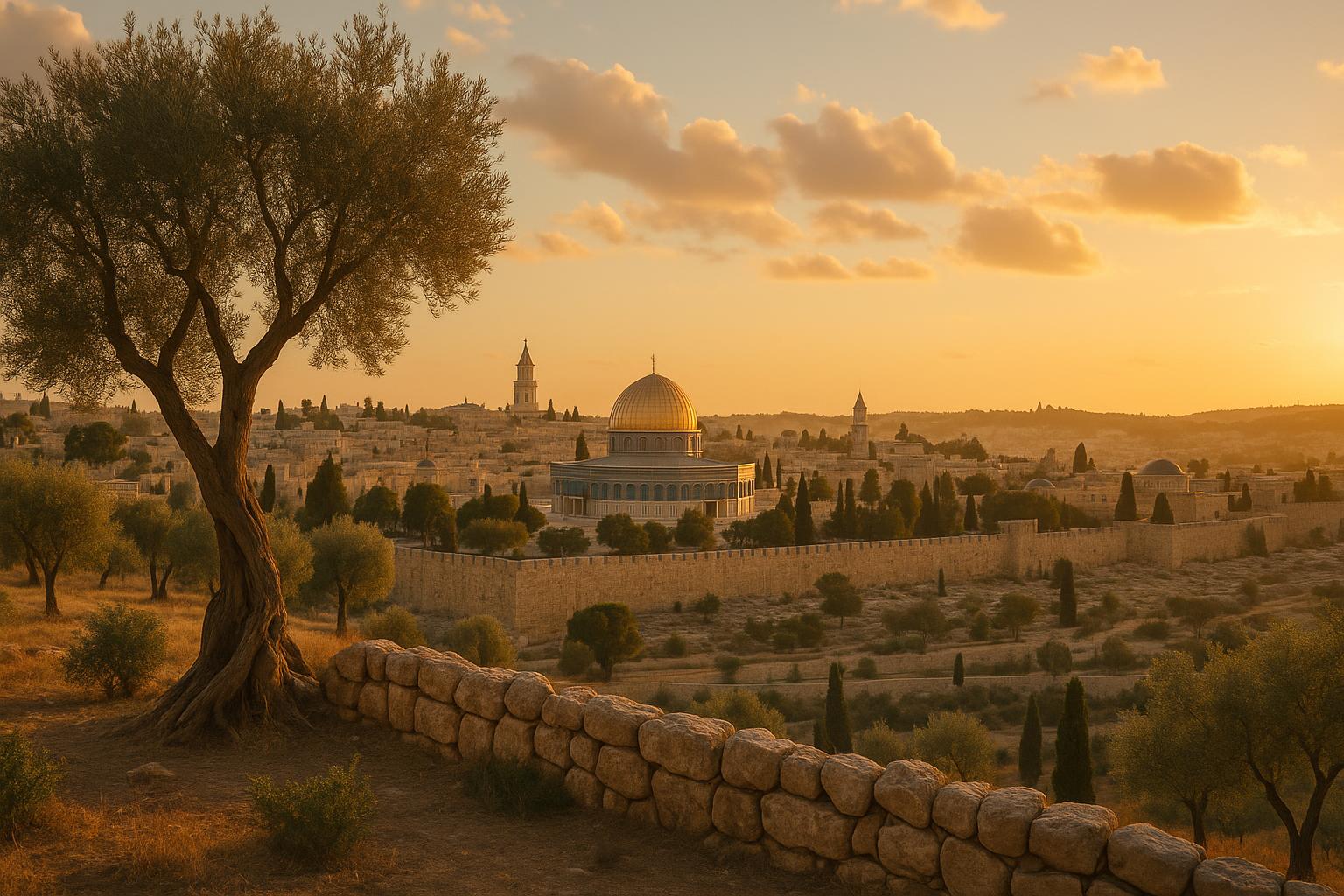
Many Levantine cities retain deep historical importance. Damascus is the world’s oldest continuously inhabited city, while Jerusalem is sacred to Christianity, Judaism, and Islam. Beirut stands out for its cultural vitality and mixed architecture. Linguistic diversity reflects centuries of migration, and the region remains globally significant in politics and culture.
About Jamal Daniel
Jamal Daniel is the founder, president, and chairman of Crest Investment Company, based in Houston, Texas. He has more than three decades of experience managing investments across energy, telecommunications, technology, media, manufacturing, and real estate. He founded Al-Monitor, an American news organization focused on in-depth reporting on the Middle East, as well as the New Levant Initiative, Levantine Films, and the Levant Foundation. Born in Syria and raised in Lebanon, he later studied in Switzerland and the United States, earning degrees from Pepperdine University and the University of Texas at Austin.