


Stuart Hansen brings extensive leadership experience in real estate investment, development, and asset management to the discussion of commercial real estate. Serving as vice president of Marquee Asset Management, LLC in Los Angeles, he works with investment partners across Asia to identify and manage promising real estate opportunities throughout the Western United States. His background also includes executive roles with Shelter Asset Management and Drewco Development Corporation, where he contributes to evaluating and structuring property investments. Earlier in his career, he gained operational and project oversight experience through positions with the Clarion Hotel Group in Canada. With a foundation built on decades of exposure to construction, development, and corporate real estate, Stuart Hansen offers a grounded perspective on the factors that shape commercial real estate markets and investment strategies.
What to Know about Commercial Real Estate
Commercial real estate (CRE) is property used for businesses and other income-generating entities. These assets offer workspaces for lease to tenants. CRE requires greater capital investments and earns higher returns than residential assets, especially in upcoming, in-demand locations.
CRE tenants, unlike residential tenants, prefer to stay in the exact location, especially after building a positive reputation and brand recognition. Profit-generating entities, therefore, become long-term tenants in these properties, generating steady cash flows for the owners.
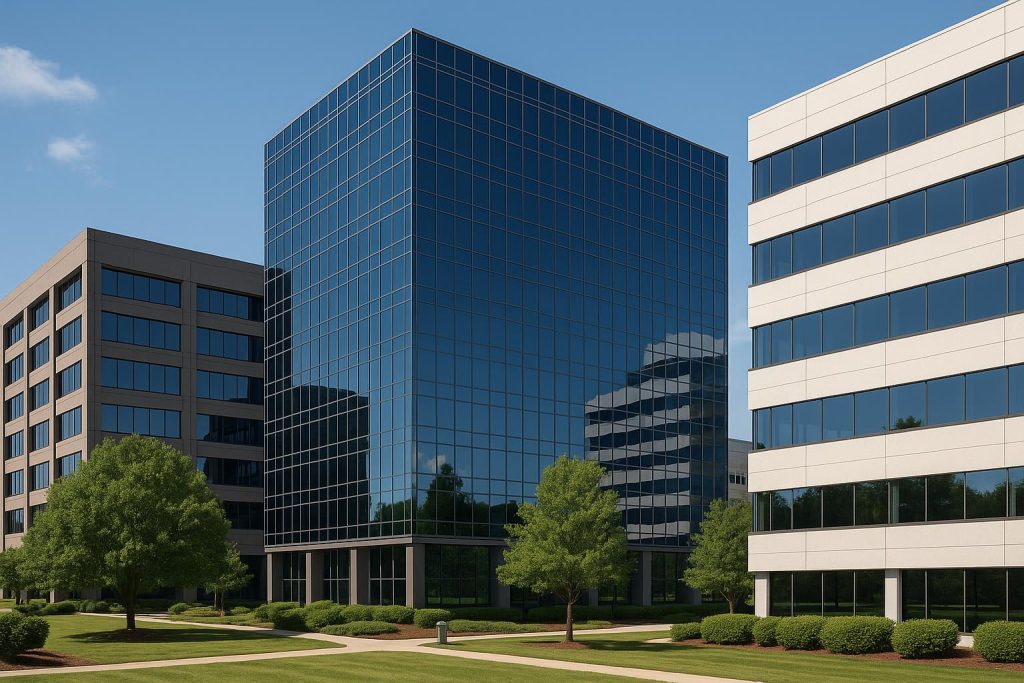
Office buildings, retail properties, industrial facilities, and multifamily units are the primary types of CRE. Office buildings offer spaces for various entities to lease, whether in urban or suburban areas. Urban assets are located in busy cities and are mostly high-rise properties and skyscrapers. Suburban office buildings are smaller and mainly situated on the outskirts of major cities. Office buildings can be classified as Class A, B, or C based on their location, available amenities, and rental rates.
Class A is the most prestigious office space, primarily comprising the newest and most visually appealing buildings. These assets are located in the best cities, charge premium rents, are professionally managed, and offer high-quality amenities. Class B office buildings are a little older than Class A, but are professionally managed. Since most of these assets are in promising locations, renovations can convert them into class A assets. Class C buildings are found in less desirable locations than A and B, charge the lowest rents, and are older. Their amenities and architectural designs are often outdated and require significant renovations to attract tenants.
Retail properties are the spaces that house malls, restaurants, standalone stores, and other retail establishments. These buildings can be multi-tenant, hosting various retailers, or single-use, occupied primarily by a single business, such as banks and supermarkets. Location, consumer behavior, and traffic in the surrounding area determine rental rates for retail property.
Industrial facilities house tenants in the manufacturing, logistics, and distribution sectors. These assets are mostly low-rise buildings found outside urban areas. Some of these assets allow tenants to customize the spaces to fit their operations, and others, referred to as flex industrial, comprise both industrial and office spaces.
Multifamily assets, on the other hand, are five or more residential units owned by a single entity. They include apartments, condominiums, and townhouses that generate returns from rental charges. Special-purpose units are a type of multifamily asset that targets a specific demographic, such as senior citizens and students who need accommodation.
Investors can enter CRE through the direct or indirect approach. The direct approach involves purchasing commercial assets, and this requires significant capital investments and in-depth market knowledge. Most investors work with real estate brokers to identify viable properties to buy and hire property managers after acquisition to handle the tenants.
The indirect approach involves investing in real estate investment trusts (REITs). Corporations set up REITs and pool multiple investors’ funds to acquire property. Investors can contribute any amount of money and own CRE. The corporations advertise vacancies, interview tenants, collect rent, oversee maintenance, and ensure the property complies with legal obligations, such as paying rent-related taxes and insurance premiums. After collecting rent, investors receive monthly dividends without worrying about hands-on management.
About Stuart Hansen
Stuart Hansen is an experienced real estate investment executive who holds leadership roles with Marquee Asset Management, Shelter Asset Management, and Drewco Development Corporation. He works with teams that identify, develop, and manage commercial and residential real estate across the Western United States. His background includes nearly two decades with the Clarion Hotel Group in Canada, where he oversaw large scale redevelopment and divestiture projects. He earned both his H.B.A. and M.B.A. from the University of Western Ontario and has been recognized with academic honors.

