


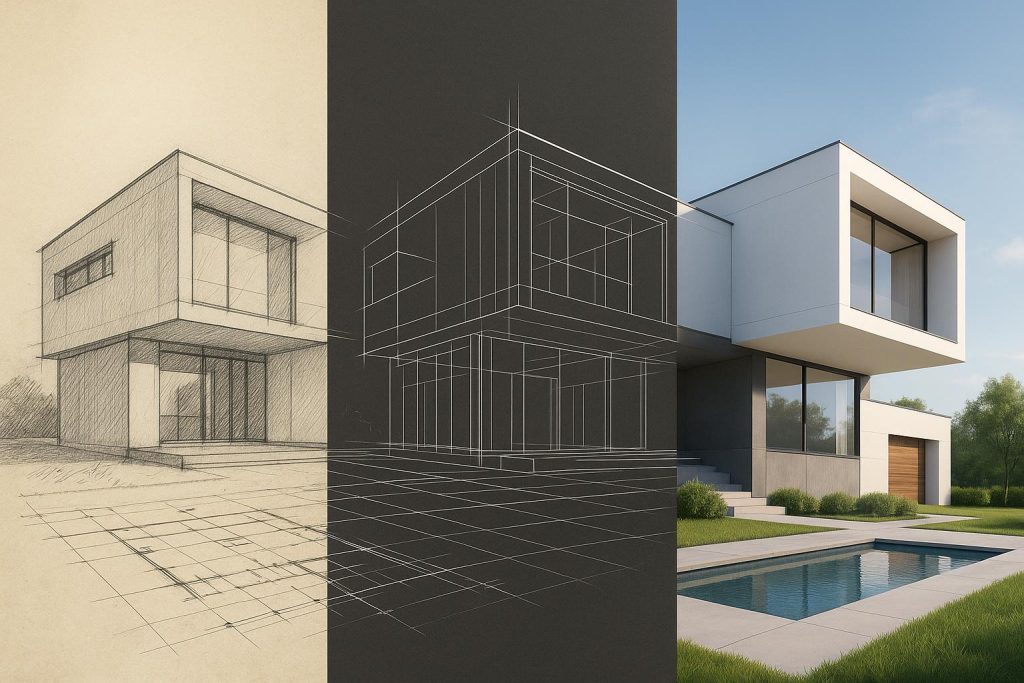
Architectural competitions are a brutal grind. Jurors have to plow through hundreds of submissions a day, and after hours of staring at blueprint lines, every technical drawing starts looking exactly the same.
Traditionally, firms relied on two-dimensional plans, sections, and static physical models to pitch their concepts. Today, that approach rarely wins. Winning proposals now rely heavily on advanced 3D rendering software and animation to transform abstract architectural designs into compelling, immersive, and highly memorable stories.
Standing Out with Cinematic Storytelling
Static blueprints require jurors to do the heavy lifting of imagining how a space functions. Advanced 3D tools change the competition game by shifting the focus entirely to cinematic storytelling. Instead of guessing what a building feels like to walk through, viewers get to experience it firsthand.
Modern rendering software allows architects to simulate realistic weather conditions, shifting sunlight across seasons, and dynamic crowd behaviors. This captures the true mood and daily utility of a space. Furthermore, these digital tools allow designers to prove environmental harmony. Showing exactly how a structure sits within its natural landscape makes the design feel inevitable and thoughtful rather than intrusive.
Communicating with Non-Architects and Decision Makers
Competition boards, city councils, and public stakeholders rarely consist entirely of architects. Non-technical decision makers often struggle to read complex, multi-layered floor plans or structural diagrams. 3D visualization bridges this gap.
- The Hero Shot: A single, high-impact 3D render that captures the core identity and emotional weight of the building. This image becomes the anchor for public relations, media coverage, and board approvals.
- Accessible Visuals: 3D perspectives translate complicated structural data into relatable, human-scale experiences that anyone can understand instantly.
- Spatial Animation: Walkthroughs and flyovers explain complex, multi-use layouts clearly, showing how people move through different interior zones over time.
Proving Urban Impact and Context
A building does not exist in a vacuum. Jurors look closely at how a new proposal impacts the existing fabric of a city, and static images cannot fully validate urban integration.
By modeling the surrounding urban context in full 3D, architects can visualize real-world conditions with high accuracy. High-fidelity simulations map out pedestrian movement and local traffic flows around the site. This ensures the new design actively improves the neighborhood layout rather than causing congestion. Additionally, accurate digital shadow studies prove the structure will not block vital sunlight from reaching adjacent properties, neighboring windows, or public parks.
Showcasing Materiality, Detail, and Sustainability
Close-up, hyper-realistic renders allow design teams to showcase innovative facade materials and fine construction details long before ground is ever broken.
Advanced rendering software can even simulate weathering, showing the natural aging process and patina of materials over decades. This proves to the jury that the building will age gracefully in the local climate. This level of detail extends directly to sustainability features. Instead of just claiming a design is eco-friendly in a text block, architects use precise 3D models to highlight green roofs, solar panel placement, and natural ventilation systems in action.
The New Baseline for Competition Success
Embracing 3D rendering software and animation is no longer just an optional bonus reserved for high-budget firms. It is the modern baseline for competitive architecture. By transforming complex data into a clear, scannable visual narrative, these digital tools bridge the gap between technical design and human emotion, giving firms the definitive edge needed to win commissions.

