


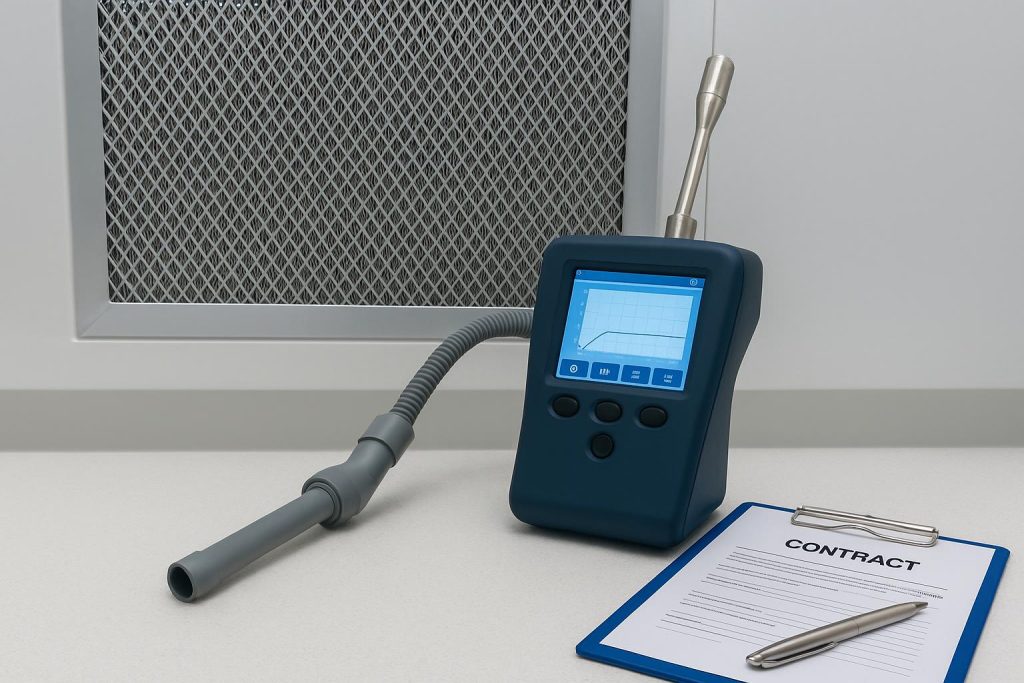
A HEPA integrity testing contract should identify every filter assembly, the agreed test method, access requirements, acceptance criteria and the records needed for handover. It should also define responsibility for investigating failures and arranging retests. Agreeing these items before commissioning gives the facility owner a clearer basis for comparing service proposals and accepting the completed work.
For a project manager, the commercial risk begins when “HEPA testing included” becomes the entire scope. The phrase leaves room for different assumptions about which filters are covered, whether access equipment is supplied and what happens if a defect is found. A useful contract makes those assumptions visible while the programme can still accommodate them.
Identify the evidence the owner needs
Start by separating the questions in the handover plan. A filter’s manufacturing documentation concerns the supplied element. Installed leak testing investigates the assembly in its site condition. Room classification addresses airborne particle concentration under the specified test conditions. Each result has a different purpose.
Hurricane Techs HEPA filter integrity testing guide description describes the installed test and the distinction from factory documentation. Use it as background when briefing the test provider, then require the proposed procedure and acceptance basis for the specific facility.
The IEST-RP-CC034 description covers leak testing at manufacturing, before installation and after installation. It also identifies aerosol challenge uniformity as part of its scope. Ask the provider to name the method and edition it proposes to use, with any departures clearly explained for review.
Create a filter schedule before asking for prices
Issue a location schedule with a unique identifier for each assembly. Include the information available about size, filter grade, housing arrangement and access. Mark any uncertainty explicitly and ask the bidder to identify the survey needed to resolve it.
Then define the commercial boundary. Does the price include every scheduled unit? Who provides ladders, lifts, escorts and shutdown access? Are evening attendance and repeat visits included? Request unit rates for agreed variations so that a later addition does not require a completely new negotiation.
Give bidders the same drawings and revision date. Ask each to return a marked schedule confirming coverage. This creates a practical check between the purchase order, site attendance and the final report.
Agree on the procedure and site readiness
For aseptic drug manufacturing, theFDA aseptic-processing guidance, section IV.D.2, discusses leak testing of HEPA media, frames and sealing gaskets at installation and at suitable intervals. Its scope is pharmaceutical aseptic processing. The applicable facility requirements should determine the approved protocol rather than an assumption that one procedure covers every industry.
Before mobilising, ask the test provider and installation team to review the physical access together. Confirm whether the planned test can reach the required surfaces and whether the necessary challenge and sampling provisions exist. Record unresolved access issues and assign an owner to close them.
Use a readiness review as a contract milestone. The provider should receive the approved procedure, current schedule and agreed operating conditions before attendance. The facility should know what work must pause and what support the test team will need.
Decide how failures will be handled
Ask bidders to explain how they record a failed result, communicate the location and preserve the original evidence. Identify who decides whether a repair is permitted, who performs the correction and who authorises a repeat test. Avoid leaving these decisions to an informal discussion during a tight shutdown.
The commercial proposal should distinguish investigation, corrective work and retesting. Where a supplier offers a combined service, request enough detail to understand those responsibilities. Agree on how replacement components and additional attendance will be approved and recorded.
This approach helps the project manager plan for an exception without assuming that one will occur. A contingency in the schedule is more useful when the team already knows the decision process and the evidence required to close the issue.
Ask for a report that supports acceptance
Review an example report before awarding the contract. It should let the owner trace a result to a physical assembly and the procedure used. Agree which raw records, calibration documents, test conditions and exception records must accompany the summary.
Hurricane Techs lists HEPA integrity checks among its cleanroom validation and performance testing services. When requesting a proposal, provide the filter schedule and documentation requirements so that the response can address the actual scope. Confirm geographical availability and site responsibilities directly in the quotation.
Keep installed filter testing connected to the wider commissioning plan. A completed leak test does not by itself establish all room performance requirements, so the owner should identify the other acceptance activities and the person responsible for their final review.
Contract checklist for the project manager
• Attach the filter schedule, location drawings and agreed test coverage.
• Identify the method, edition, operating condition and acceptance criteria.
• Allocate access, utilities, attendance and site-readiness responsibilities.
• Define the required report, supporting records and review period.
• State the process for deviations, authorised corrections and retests.
• Record rates for agreed changes and the evidence needed to close each milestone.
Frequently asked questions
Is a factory certificate enough for handover? It addresses the filter as supplied. The project must separately determine the installed testing and room-performance evidence needed for acceptance.
Are DOP and PAO quotations automatically comparable? No. Ask for the proposed aerosol, procedure, equipment and scope. The shorthand test name does not describe the whole service.
Should every facility use the same retest interval? The interval should follow the applicable requirements, approved maintenance programme and assessment of changes or events affecting the installation.
A clear testing contract gives the owner something specific to accept. It connects the scheduled assemblies, the agreed procedure and the final records, while making responsibilities for exceptions understandable before the handover deadline arrives.

